From 3 to 9 November, European Fertility Week (EFW) 2025 turns the spotlight on a subject that still does not get enough attention — fertility education. Under the theme “Facts Forward – Education and Information,” this year’s campaign calls for more accessible, accurate, and inclusive knowledge about fertility.
At Procriar, we believe education is the foundation for informed decisions. Yet, across Europe, most people finish school knowing little about their fertility; how it changes with age, how conditions like PCOS or endometriosis affect it, or even what a healthy menstrual cycle looks like.
These are essential facts that can shape someone’s future choices, relationships, and wellbeing.
For many, the first time they hear about fertility is when they start trying to conceive, often years, or even decades, after leaving school. In most education systems, fertility is mentioned briefly, if at all, within lessons on contraception or puberty.
The focus tends to be on preventing pregnancy rather than understanding reproductive health as a lifelong topic.
This narrow approach leaves many young people unprepared for the realities of fertility.
For women, this education gap can mean delayed diagnosis of underlying conditions like endometriosis or polycystic ovary syndrome (PCOS), both of which can affect fertility if left untreated.
Why early education matters
Teaching fertility as part of comprehensive sexual education helps people make informed decisions about their bodies and their futures. It encourages responsibility, reduces stigma, and promotes equality by recognising that fertility is not only a women’s issue but a shared human experience.
Education is key and if you’re ready to take the next step in understanding your fertility, a personalised consultation can provide clarity and next steps.
Interview with Dr Sofia Costa on fertility in Europe
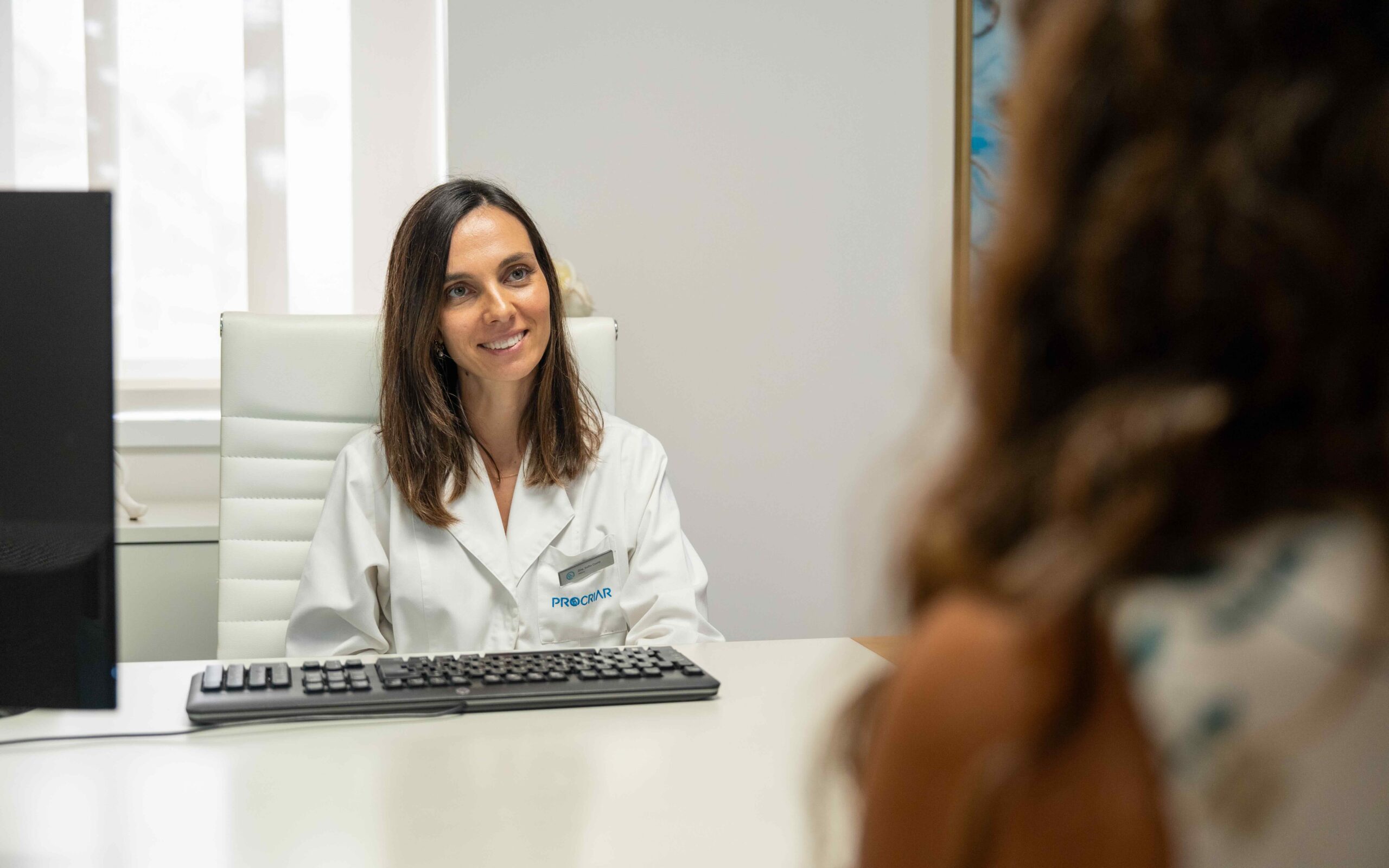
We spoke to Dr Sofia Costa, Gynaecologist and Obstetrician at Procriar, to understand why fertility education matters, what young people should be learning, and how early awareness can change lives.
Dr Sofia, how big is the problem of infertility in Europe today, and do you think that a lack of fertility education contributes to this?
Infertility is far more common than many people realise. The World Health Organization now recognises it as a major public health issue, affecting around one in six adults worldwide — and the numbers are similar across Europe.
In Portugal, the situation reflects a broader European trend. The average age at first child is now over 30, which naturally reduces the chances of conceiving without help and increases the need for fertility treatment.
At the same time, the country’s fertility rate remains low at about 1.4 children per woman — a figure that highlights the growing challenges many couples face in achieving their desired family size.
A big part of the problem is that most of us grow up without learning much about fertility.
We are taught how to prevent pregnancy, but not how to protect fertility. Many people do not realise how strongly age, smoking, stress, infections, or weight can influence their chances of conceiving later.
This lack of awareness often leads to delayed decisions and misplaced confidence in what fertility treatments can achieve — because medicine, unfortunately, cannot undo the effects of time.
Although sex education is mandatory in Portuguese schools, the reality is inconsistent. Teachers may lack training or time, and fertility is rarely discussed in depth. As a result, young people leave school informed about contraception but unprepared for the realities of their reproductive health.
Why is fertility education so often left out of school curricula, even when discussing sexual health?
Even when schools include sex education, fertility is often left out of the conversation. Lessons tend to focus on preventing pregnancy and sexually transmitted infections, which are, of course, essential topics — but they leave a big gap in understanding how fertility actually works.
Part of the problem is perception. Fertility is still seen as something that only concerns adults or people who are ready to start a family. Many teachers also feel uncomfortable or underprepared to discuss it, simply because they have not received the right training or resources.
And since fertility education is not formally assessed, it often falls to the side in already busy school curricula.
The outcome is a generation that knows how to avoid pregnancy but not how to protect their fertility — unaware of how factors like age, lifestyle, and underlying health conditions can shape their future chances of conceiving.
What are the most common misconceptions about how fertility changes with age?
There are still many misconceptions about age and fertility — even among people who consider themselves well-informed.
One of the most common myths is that female fertility suddenly drops at 35. In reality, the decline starts gradually around age 30, becomes steeper after 35, and is much more pronounced after 40. By that age, the chance of conceiving naturally is roughly half of what it is in a woman’s twenties, and the risks of miscarriage or chromosomal abnormalities also increase.
Another misconception is that a man’s age does not matter. In fact, research shows that from around 40 to 45 years old, sperm quality begins to decline and the likelihood of genetic mutations rises.
It is also untrue that using the contraceptive pill for many years “damages” fertility. The pill simply prevents ovulation — it does not cause infertility. What it can do is mask existing ovulation problems that may only become visible once the pill is stopped.
Finally, people often overestimate what assisted reproductive technology (ART) can achieve. Even with great advances in science, success rates still fall with age — from around 35% before age 35 to less than 10% after 40. Fertility treatments can offer hope, but they cannot fully overcome biology.
At what age should fertility and reproductive health education begin, and what should it include?
Fertility education should start early and grow gradually with age.
In primary school, children can learn the basics — how the body works and the physical changes that come with puberty.
In middle school, lessons can introduce the menstrual cycle, ovulation, fertile periods, and the main factors that influence fertility.
By secondary school, education should expand to include how age affects fertility, the impact of sexually transmitted infections (STIs), fertility preservation, responsible parenthood, and lifestyle habits such as smoking, alcohol use, nutrition, sleep, and stress.
This approach follows UNESCO and World Health Organization (WHO) guidelines for comprehensive sexuality education. More than just adding information, the goal is to make fertility part of broader health literacy — helping young people make conscious, informed choices throughout their reproductive lives.
How does better fertility literacy help people make informed choices?
Understanding how fertility works allows people to make more realistic and autonomous decisions. Knowing how to identify the fertile window, recognise signs of dysfunction, and understand how age or habits affect fertility helps individuals plan their reproductive future with greater confidence and responsibility.
Fertility literacy also promotes healthier behaviour — such as quitting smoking, maintaining a balanced weight, reducing alcohol and caffeine intake, managing stress, and getting enough sleep — all of which can have a positive impact on fertility.
In short, educating people about fertility is about much more than conception; it is about body awareness, autonomy, and overall health.
Should conversations about fertility also include men and their reproductive health?
Absolutely. Male factors contribute to 40–50% of infertility cases, yet men’s reproductive health is often overlooked.
Age, smoking, obesity, excessive alcohol consumption, chronic stress, and exposure to heat or chemicals can all reduce sperm quality.
According to the American Society for Reproductive Medicine (ASRM), long periods of abstinence (more than five days) can lower sperm count, while regular intercourse — every one to two days during the fertile window — maximises the chances of conception.
It is essential to normalise discussions about male fertility, both in education and in family planning consultations. Encouraging men to get screened and to consider fertility preservation when necessary is key to improving outcomes for everyone.
What are the main risk factors affecting fertility that most people are unaware of?
Beyond age and sexually transmitted infections (STIs), several other factors can quietly affect fertility:
Obesity and inactivity – can disrupt hormonal balance, ovulation, and sperm quality.
Exposure to endocrine disruptors – chemicals such as phthalates, bisphenol A, pesticides, and air pollutants interfere with hormone function and the production of eggs and sperm.
Lack of sleep and shift work – can disturb normal hormonal rhythms.
Chronic stress – affects menstrual cycles and semen quality.
Smoking, alcohol, and cannabis – reduce fertility and increase the risk of miscarriage.
Unbalanced diet – diets high in processed foods and unhealthy fats can negatively impact fertility.
The American Society for Reproductive Medicine (ASRM) notes that there is no “miracle diet,” but following a Mediterranean-style diet — rich in vegetables, fish, olive oil, and whole grains — is linked to higher conception and pregnancy rates.
How can counselling or early fertility screening change the outcome for those who have difficulty conceiving?
Preconception and family planning consultations are key opportunities to optimise reproductive health. These visits should go beyond contraception and include:
reviewing chronic conditions and medication;
recommending appropriate supplementation (such as folic acid, vitamin D, and iodine);
assessing lifestyle factors like weight, smoking, alcohol use, sleep, and stress;
and providing education about fertility and reproductive age.
Early screening helps identify conditions such as anovulation, endometriosis, varicocele, or hidden infections so that treatment can start sooner.
Both national and international guidelines recommend seeking specialist advice after 12 months of unsuccessful attempts to conceive — or after 6 months for women aged 35 and over.
Acting early can shorten the time to conception and ease the emotional strain that often comes with infertility.
What role should health systems and governments play in improving fertility education in Europe?
Governments should ensure that sexual and reproductive education covers not only pregnancy and STI prevention but also fertility — including preservation options, family planning, and the role of men in conception.
Within health systems, family planning consultations should be reframed as comprehensive reproductive health visits for both women and men, with a stronger focus on literacy, prevention, and early diagnosis.
Public awareness campaigns, professional training, data monitoring, and sustainable funding are also essential.
When school education, public information, and early counselling work together, they can help lower infertility rates and support more informed, equitable choices about reproductive health.
If you could change one thing about how society talks about fertility and reproductive health, what would it be?
I would change the idea that fertility is “a women’s issue” or something that medicine will simply fix when the time comes.Fertility is a shared aspect of health — something to understand, protect, and plan for throughout life.
We need to talk about it openly, accurately, and inclusively — from the classroom to public awareness campaigns — and involve men as active participants in the conversation.
Only when fertility is treated as a natural part of overall health will we move past taboos and empower people to make informed, confident decisions about their reproductive lives.
Closing thoughts
European Fertility Week is a reminder that knowledge can change lives. As Dr Sofia Costa points out, fertility education should not begin only when someone decides to have a child — it should start much earlier, as part of learning about our bodies and health. When people understand how fertility works, they can make choices that feel right for them, at the right time.
At Procriar, we believe that awareness builds confidence. By sharing open, honest, and accessible information, we can help more people feel informed, supported, and in control of their reproductive health.
To provide the best experiences, we use technologies like cookies to store and/or access device information. Consenting to these technologies will allow us to process data such as browsing behavior or unique IDs on this site. Not consenting or withdrawing consent, may adversely affect certain features and functions.
Functional
Always active
The technical storage or access is strictly necessary for the legitimate purpose of enabling the use of a specific service explicitly requested by the subscriber or user, or for the sole purpose of carrying out the transmission of a communication over an electronic communications network.
Preferences
The technical storage or access is necessary for the legitimate purpose of storing preferences that are not requested by the subscriber or user.
Statistics
The technical storage or access that is used exclusively for statistical purposes.The technical storage or access that is used exclusively for anonymous statistical purposes. Without a subpoena, voluntary compliance on the part of your Internet Service Provider, or additional records from a third party, information stored or retrieved for this purpose alone cannot usually be used to identify you.
Marketing
The technical storage or access is required to create user profiles to send advertising, or to track the user on a website or across several websites for similar marketing purposes.