Explore our treatments

New year, future you: is egg freezing right for you?

  • Guides
06 Jan 2026
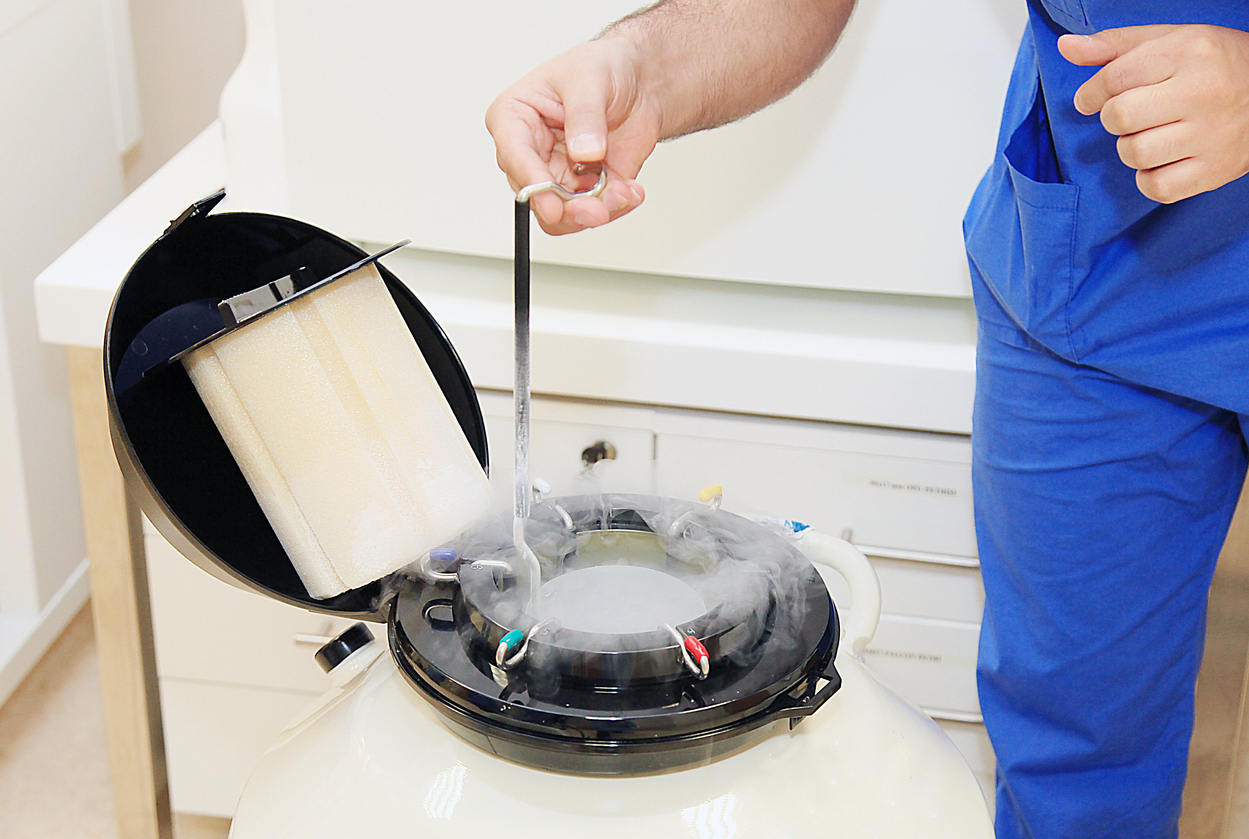
Laboratory technician handling frozen eggs in a cryogenic storage tank as part of egg freezing and fertility preservation

The start of a new year often brings fresh thoughts about the future. Career plans, relationships, travel, and for many women, questions about fertility.

Egg freezing is one option women consider when pregnancy is not part of the plan right now, but they want to keep their options open for later. It allows eggs to be frozen at a younger age for potential future use.

If you are thinking ahead to 2026 and wondering whether egg freezing could make sense for you, this article explains what the process involves, how long it takes, and when it may be worth exploring.


What is egg freezing?

Egg freezing, also called oocyte cryopreservation, is a fertility preservation treatment. It allows you to freeze and store your eggs now, so they may be used later if you choose.

The eggs are:

  • Collected from the ovaries
  • Frozen using vitrification
  • Stored safely until they are needed

If you decide to use them in the future, the eggs are thawed, fertilised, and transferred as embryos through IVF.

Dr Joana Mesquita Guimarães, Clinical Director at Procriar says:


Egg freezing gives women the possibility of using eggs collected at a younger age later on. It is about preserving potential, not predicting outcomes.

Why age matters for eggs (and why sperm is different)

Illustration showing sperm cells moving toward an egg, representing fertilisation as part of IVF and fertility preservation treatment

Egg freezing exists because eggs and sperm do not age in the same way.

Women are born with all the eggs they will ever have. Over time, both the number of eggs and their quality gradually decrease. This is a normal biological process and happens even in very healthy women.

As eggs age, they are more likely to:

  • Have difficulty fertilising
  • Stop developing after fertilisation
  • Have chromosomal changes that affect embryo development

Freezing eggs at a younger age preserves them at that point in time. Those eggs do not continue to age while they are frozen. Dr. Guimarães explains:

Egg freezing allows us to preserve eggs as they are today, rather than as they may be in the future. It does not stop ageing, but it does pause it for those eggs.

Why men do not usually freeze sperm in the same way

Sperm is different.

Men produce new sperm continuously throughout adult life. While sperm quality can change with age, it does not decline in the same predictable way as egg quality.

Sperm is also:

  • Easier to collect
  • Easier to freeze
  • Less affected by time when frozen

For this reason, sperm freezing is usually done for specific medical reasons, such as cancer treatment, rather than as a routine planning step.

Egg freezing exists because female fertility follows a different biological timeline.

What this means in practical terms

Egg freezing is not about improving fertility. It is about preserving the current state of fertility.

Freezing eggs earlier offers:

  • A higher chance that eggs will survive thawing
  • Better fertilisation potential
  • Greater likelihood of embryo development

However, it does not remove all uncertainty. As Dr. Guimarães explains:


Understanding biology helps women make informed decisions. But although egg freezing can be useful, it is also not a guarantee.


Why women consider egg freezing

Fertility specialist meeting with a patient during a consultation to discuss egg freezing, fertility preservation, and future treatment options

Women come to Procriar for egg freezing for many different reasons. There is no single profile.

  • Some are focused on career or studies.
  • Some have not yet met the right partner.
  • Some are in relationships but not ready for parenthood.
  • Some are not even sure they want children.

Often, egg freezing is not about making a firm decision. It is about creating time and space to decide later.


When is the right age to freeze your eggs?

As we’ve explained before, age plays an important role in egg freezing because both egg quantity and quality change over time.

In general:

  • Egg quality is highest in your twenties and early thirties
  • Fertility gradually declines after 35
  • Eggs frozen earlier tend to have more potential later

That said, there is no single “right” age. As Dr. Guimarães explains:


What matters most is understanding what egg freezing can realistically offer you at your age. That conversation is more important than focusing on a number.


What egg freezing can and cannot do

Egg freezing can preserve eggs at their current age so they may be used later. It can give some women more flexibility when pregnancy is not the right step right now.

What egg freezing can do:

  • Preserve eggs as they are today, rather than allowing them to age further
  • Increase the chance of using younger eggs later on
  • Provide time to make decisions without immediate pressure

Give some women the possibility of trying for pregnancy later using their own eggs, rather than donor eggs

What egg freezing cannot do:

  • Guarantee a future pregnancy
  • Reverse natural ageing
  • Remove the need for IVF if eggs are used later
  • Replace the role of overall health and uterine factors

Dr. Guimarães highlights:

Egg freezing is a helpful option for some women, but it is important to understand its limits. Our goal is always to support informed, realistic decisions.


Egg freezing works best when it is understood as one option, not a solution to every fertility concern.


What happens at an egg freezing consultation?

An egg freezing consultation at Procriar is an information focused appointment.

There is no expectation that you will proceed with treatment.

During the consultation, your specialist will:

  • Review your medical and reproductive history
  • Talk through your menstrual cycle
  • Explain how age affects egg quality and quantity
  • Recommend appropriate fertility tests
  • Discuss what egg freezing could look like for you

Some women come in thinking they want to freeze their eggs, and decide to wait. Others feel more confident moving forward. Both are good outcomes.


How egg freezing works

Patient resting in a hospital bed while fertility clinic staff provide care following an egg retrieval procedure as part of fertility treatment

Although it can sound complex at first, egg freezing is a straightforward medical process that many women choose each year. Treatment usually takes a few weeks and, for most women, can be managed alongside day to day life.

Below is a step by step overview of the egg freezing process, from the start of treatment through to storage and future use, so you know what to expect at each stage.

Step 1: Hormone stimulation (8 to 12 days)

For around 8 to 12 days, you take a tailored course of fertility medication. This encourages the ovaries to mature several eggs in one cycle, rather than the single egg usually released each month.

Step 2: Monitoring

During stimulation, the team monitors your response closely using ultrasound scans and blood tests. This allows your specialist to adjust medication if needed and to identify the right time for egg collection.

Step 3: Egg collection

When the follicles have reached the appropriate size, the eggs are collected in a short procedure performed under anaesthesia. You can go home the same day.

Step 4: Laboratory preparation and freezing

After collection, the eggs are identified and assessed in the laboratory. Mature eggs are then rapidly frozen using a method called vitrification and stored at very low temperatures.

Step 5: Storage

Once frozen, eggs are carefully labelled and stored securely. In Portugal, they can be stored and used until the day before you reach the age of 50, in line with current regulations.

Step 6: Thawing and fertilisation

If you decide to use your frozen eggs in the future, they are thawed in the laboratory. Each egg is then fertilised by injecting a single sperm directly into the egg.

Step 7: Embryo transfer

If embryos develop, they are usually grown in the laboratory for five days. One or two embryos are then transferred into the uterus during an IVF procedure. Any suitable embryos that are not transferred can be frozen for future use.


What tests are needed before egg freezing?

Gloved hand holding blood sample tubes during hormone testing as part of fertility assessment and egg freezing preparation

Before starting egg freezing, a small number of fertility tests are recommended. Most of these can be completed within one menstrual cycle.

These tests usually include:

  • Hormone blood tests, to assess how the ovaries are functioning
  • An ultrasound scan of the ovaries, to look at follicle numbers and ovarian structure
  • Ovarian reserve assessment, which helps estimate how many eggs may be available
  • General health screening, to ensure it is safe to proceed with treatment

The results help your specialist understand:

  • How many eggs may be collected in a cycle
  • How the ovaries are likely to respond to stimulation medication
  • Whether one cycle may be sufficient or if more than one cycle could be worth considering

This information allows your treatment plan to be tailored to you and helps set realistic expectations before you decide how to proceed.


How many eggs should be frozen?

There is no single number of eggs that can guarantee a future pregnancy. Recommendations are always individual and depend on both medical factors and personal goals.

It is also important to understand that not every egg retrieved will result in an embryo. At each stage of the process, numbers naturally decrease. Some eggs may not survive freezing and thawing, some may not fertilise, and not all embryos will develop. This is a normal part of treatment and is why egg numbers matter.

The number of eggs your specialist may recommend depends on:

  • Your age at the time of freezing, as egg quality changes over time
  • Egg quality and ovarian reserve, which influence how eggs develop
  • Your long term plans, such as whether you hope to have one child or more

Based on published data and clinical experience, specialists often use general estimates to guide discussions. For example:

  • Under 38 years: freezing around 15 to 20 mature eggs is associated with an estimated 70 to 80 percent chance of having at least one live birth
  • Aged 38 to 40 years: freezing around 25 to 30 mature eggs is associated with an estimated 65 to 75 percent chance of having at least one live birth

These figures come from population level studies and are intended as guidance rather than predictions. Outcomes vary between individuals, and no number of eggs can guarantee success.

Some women reach these ranges in one cycle. Others choose to complete more than one cycle to increase the number of eggs frozen and, with that, the range of options available later. As Dr. Guimarães says:


Our role is to help patients understand the data in the context of their own situation. Not to promise outcomes, but to support informed and realistic decisions.


What if frozen eggs do not lead to a pregnancy later?

It is understandable to wonder what happens if frozen eggs do not result in a pregnancy, especially if you are using them in your forties.

Egg freezing increases options, but it does not remove all uncertainty. Some eggs may not survive thawing, some may not fertilise, and not all embryos will develop or implant. This can happen even when eggs were frozen at a younger age.

If frozen eggs do not lead to a pregnancy, there are still options to consider. Which path is right depends on your medical situation, your personal preferences, and your goals.

Using donor eggs

One option is treatment with donor eggs. Donor eggs come from younger donors and generally have higher success rates, particularly in women in their forties. For some people, this offers a clearer path to pregnancy when using their own eggs is no longer possible.

IVF with current eggs

In some cases, it may still be possible to try IVF using eggs collected at your current age. This option depends on ovarian reserve, egg quality, and overall health, and success rates vary.


“Part of our role is to help patients understand all their options, including what comes next if a particular treatment does not work”, says Dr Guimarães.


Looking ahead with more clarity

Egg freezing is now a well-established and widely used procedure, chosen by many women who want to plan ahead when pregnancy is not the right step for them. It has become a practical option for those who value flexibility and want to make informed choices about their future.

While egg freezing does not guarantee a pregnancy, it can be a proactive step that helps preserve the possibility of using younger eggs later on. For many women, that knowledge alone can ease pressure and allow them to focus on other parts of life with more confidence.

At Procriar, the focus is on clear information, personalised care, and realistic guidance. Whether you decide to proceed with egg freezing or simply want to understand your fertility better, taking the time to explore your options is a positive step in itself.


Frequently asked questions about egg freezing

Does egg freezing guarantee pregnancy later?

No. Egg freezing does not guarantee a future pregnancy.

While freezing eggs can increase the chance of using younger eggs later, success depends on several factors, including:

  • Age at the time of freezing
  • The number of eggs frozen
  • How well eggs survive thawing
  • Fertilisation and embryo development in the laboratory
  • Uterine health at the time of embryo transfer

Egg freezing is best understood as a way to preserve possibilities, not certainty. It can be a useful option for some women, but it cannot remove all uncertainty around future fertility.


Does egg freezing use up all my eggs or cause early menopause?

No. Egg freezing does not use up all your eggs and does not cause early menopause.

Each month, your ovaries naturally prepare a group of eggs. In a normal cycle, one egg is released and the rest are lost. During egg freezing, medication allows more of those eggs that would otherwise be lost that month to mature and be collected.

Egg freezing does not speed up egg loss, does not reduce your overall egg supply, and does not bring menopause closer.

The ovaries continue to function normally after treatment, and your natural cycle resumes once the process is complete.


How long can frozen eggs be stored?

Under Portuguese law, eggs may be stored in renewable five-year periods, and embryos created from those eggs may be used until the day before age 50.


When can frozen eggs be used?

Frozen eggs can be used if and when you decide to use them. There is no obligation to do so.

They may be used:

  • With a future partner
  • With donor sperm
  • After trying to conceive naturally
  • As part of IVF later in life

Some women never use their frozen eggs, while others are grateful to have them as an option. Freezing eggs is about preserving choice, not committing to a particular path.


Is egg freezing painful?

Most women describe egg freezing as manageable rather than painful. Hormone injections can cause temporary bloating or discomfort, and some women feel mild cramping after egg collection. The procedure itself is done under anaesthesia, and most women return to normal activities within a day or two.


How long does the egg freezing process take?

One egg freezing cycle usually takes 2 to 6 weeks from start to finish. This includes preparation, hormone stimulation, monitoring appointments, and egg collection. The exact timeline varies slightly from person to person.


Will egg freezing affect my hormones long term?

No. The fertility medication used during egg freezing temporarily increases hormone levels, but these return to normal after the cycle ends. Egg freezing does not use up future eggs or affect long term hormonal balance.


Can I work and exercise during egg freezing?

Most women continue working during treatment. Light to moderate activity is usually fine, but high impact exercise is often discouraged during stimulation to protect the ovaries. Your specialist will advise you based on your response to treatment.


Do I need more than one egg freezing cycle?

Some women freeze enough eggs in one cycle. Others choose to complete more than one cycle to increase the number of eggs stored. This decision depends on age, ovarian reserve, response to medication, and personal goals.


What happens if I decide not to use my frozen eggs?

If you do not use your frozen eggs, you can continue to store them long term, with a storage fee applied for each renewable five-year period. If you decide you no longer wish to store them, you may choose to discard them or, with your informed consent, allow them to be used for research.